Homestead Roofs and the Wind Memory That Shaped Modern Code
Hurricane Andrew rewrote the Florida Building Code. Homestead lived through the rewrite. Here is what that means for your roof in 2026.
If you live in Homestead and you were here for Andrew in 1992, you do not need anyone to explain why hurricane straps and ring-shank fasteners matter. You watched the part of South Florida that was supposed to be over by Wednesday afternoon take a month to find power again. The building code that came out of that is the reason your house in 2026 is built differently from your aunt's house up in Pembroke Pines.
Here is what changed, why it matters for your roof, and what to do about it now.
The pre-1992 install reality
Most Homestead homes built before Andrew used standard galvanized nails to attach shingles, no peel-and-stick membrane, minimal hurricane straps tying the rafters to the wall plates, and asphalt underlayment that was good but not great. By the standards of the time, it was a code-compliant install. By the standards of 2026, it was a roof that depended a lot on the storm being polite.
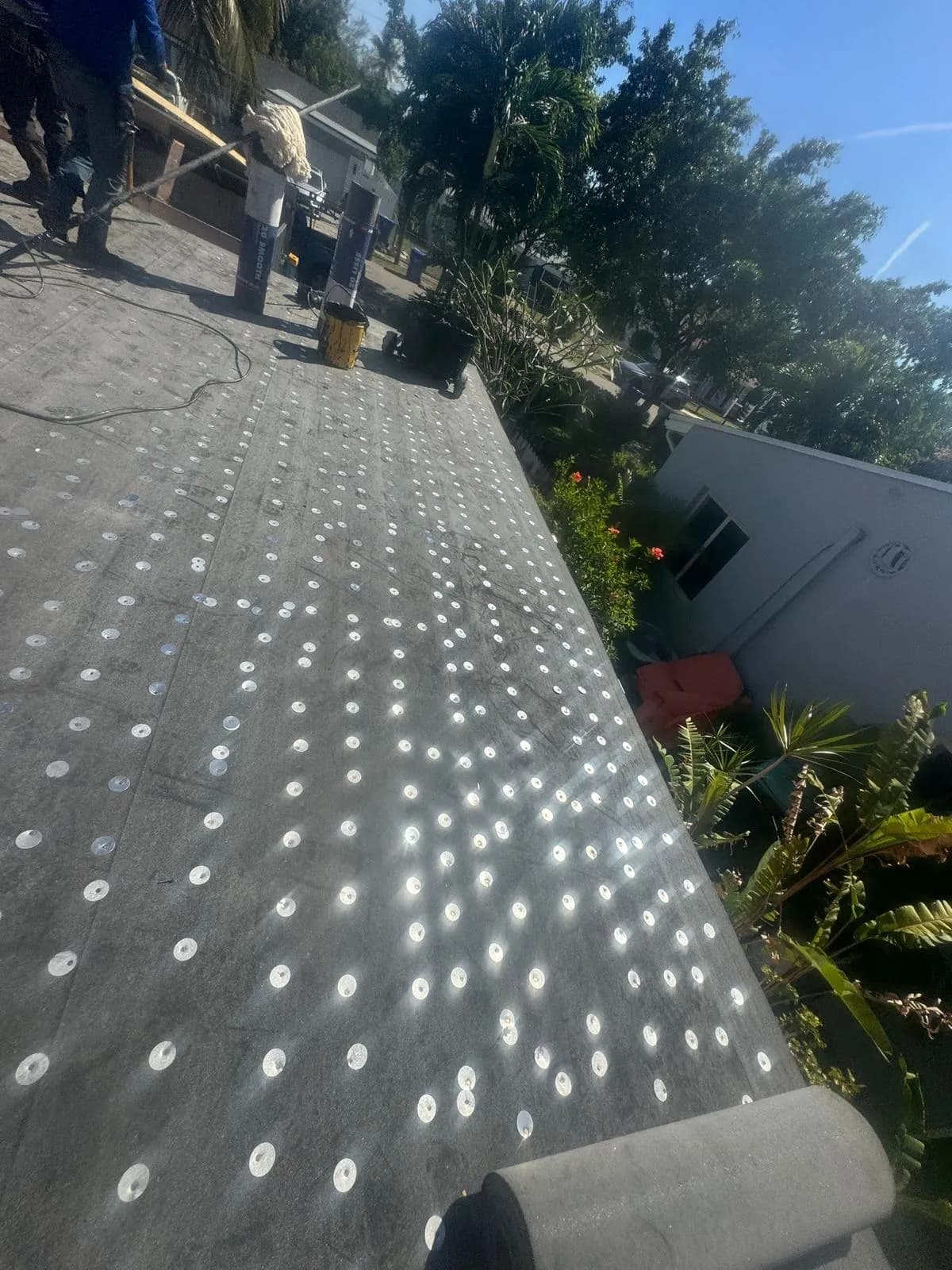
Andrew was not polite. The post-Andrew code rewrite addressed every weak point that the storm exposed. The Florida Building Code now requires HVHZ-rated assemblies, hurricane strapping to a specific minimum, ring-shank or screw fasteners depending on the product, and peel-and-stick underlayment in the perimeter and valleys.
What this means for your Homestead roof project
If your home was built or rebuilt after 1995, the structural roof framing is probably already code-compliant. The shingles or panels on top of that framing are the wear layer that wears out on the normal timeline (15 to 25 years for shingle, 40 to 70 for metal, 50-plus for tile).
If your home was built before 1992 and never had the framing upgraded during a previous reroof, your roof might still have the old hurricane straps or none at all. During a full reroof we can inspect the strapping detail and upgrade where it does not meet current code. This is one of the line items that pays you back through insurance credits later.
The Homestead wind exposure
Homestead has less tree cover than inland Miami-Dade, more open agricultural land to the west, and the geographic exposure that 1992 made famous. The roofs that last in Homestead are the ones that were installed with that reality in mind, not against it.
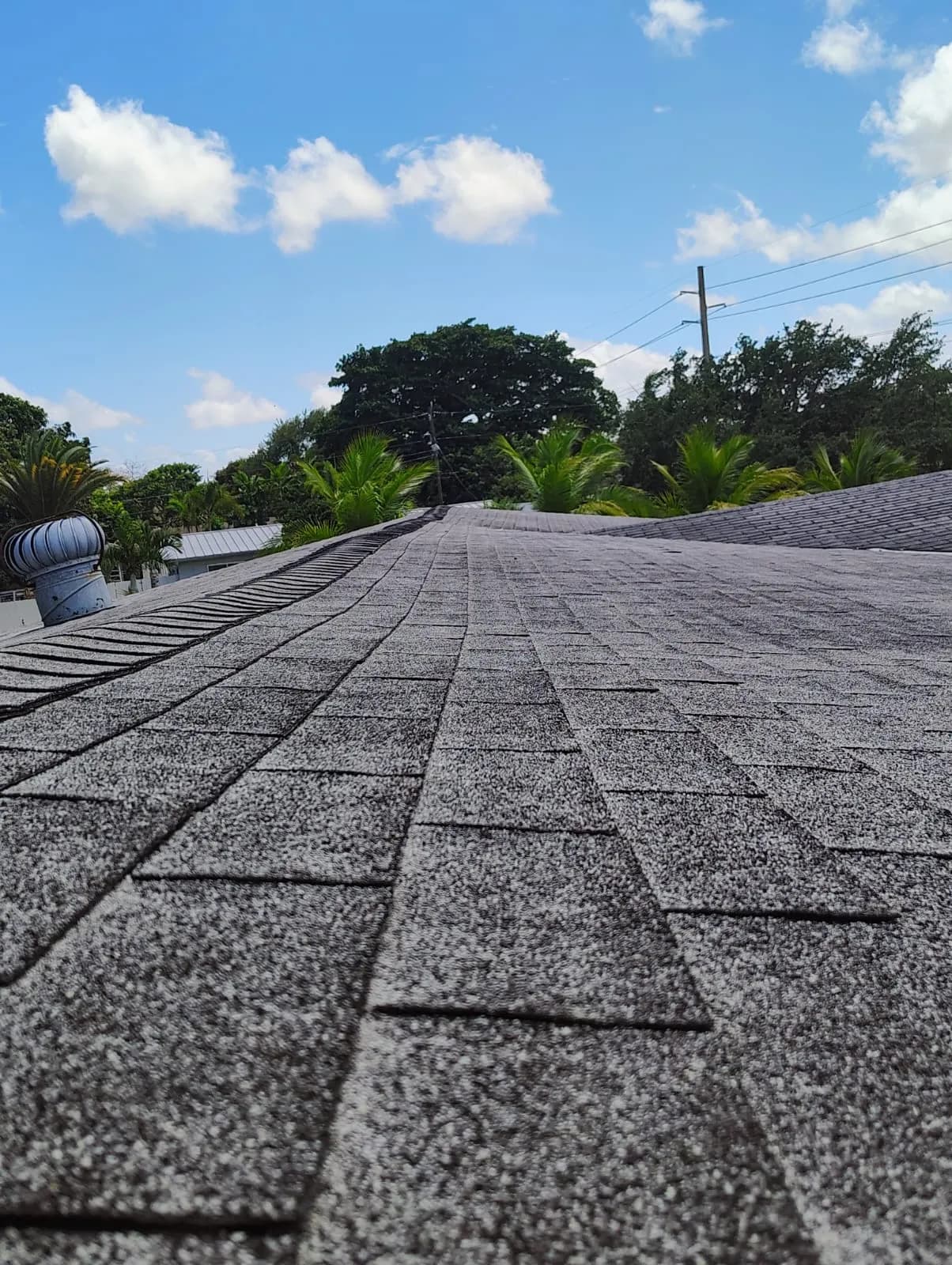
Every product we install in Homestead carries Miami-Dade HVHZ approval. Hurricane strapping, ring-shank fasteners, peel-and-stick underlayment in the perimeter and valleys, full ridge ventilation: not optional, and not where we cut corners.
The shingle, metal, and tile decision
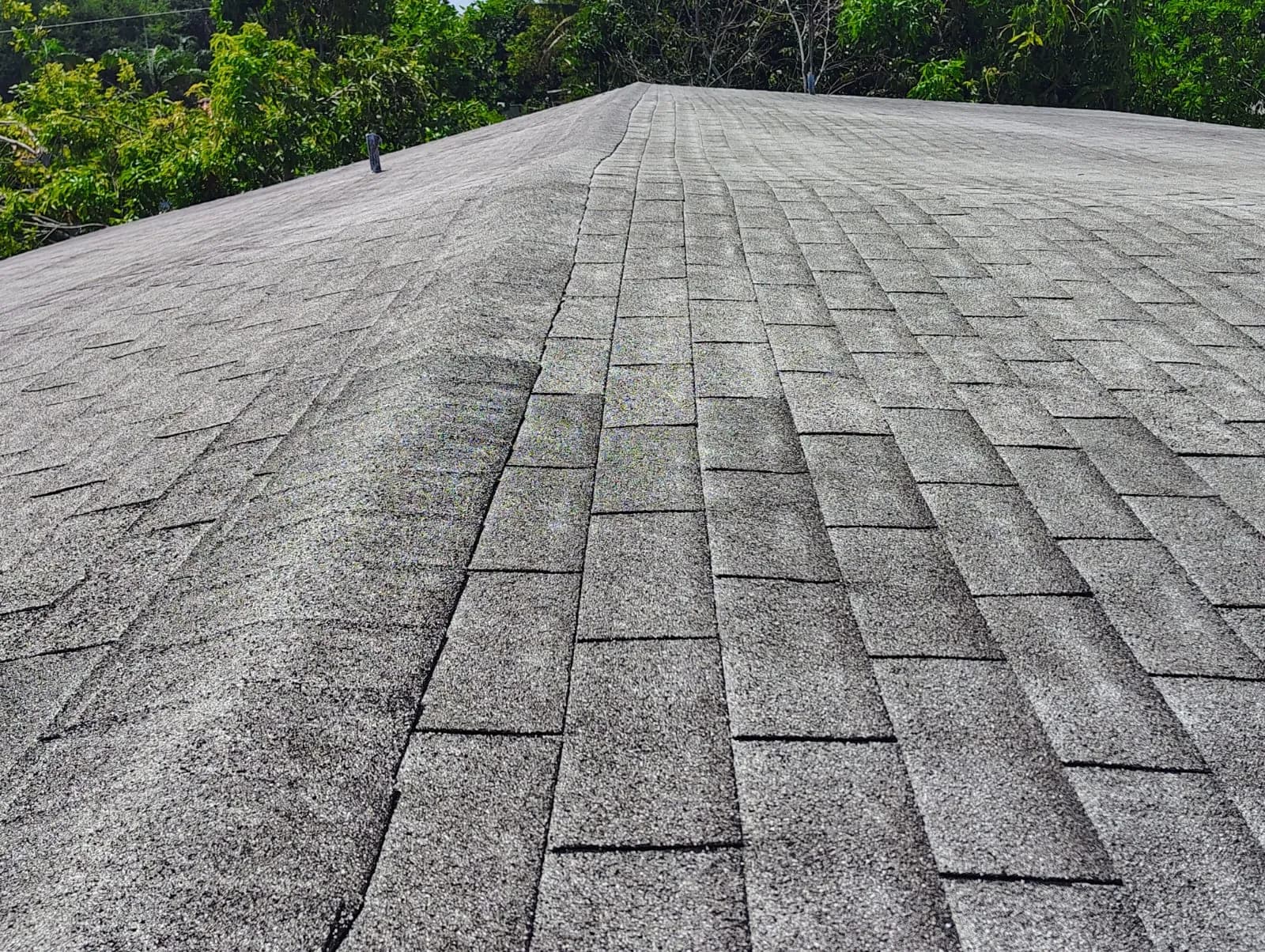
For most Homestead single-family homes we install architectural asphalt shingle. It is the budget-friendly default, meets HVHZ, and works well across the city.
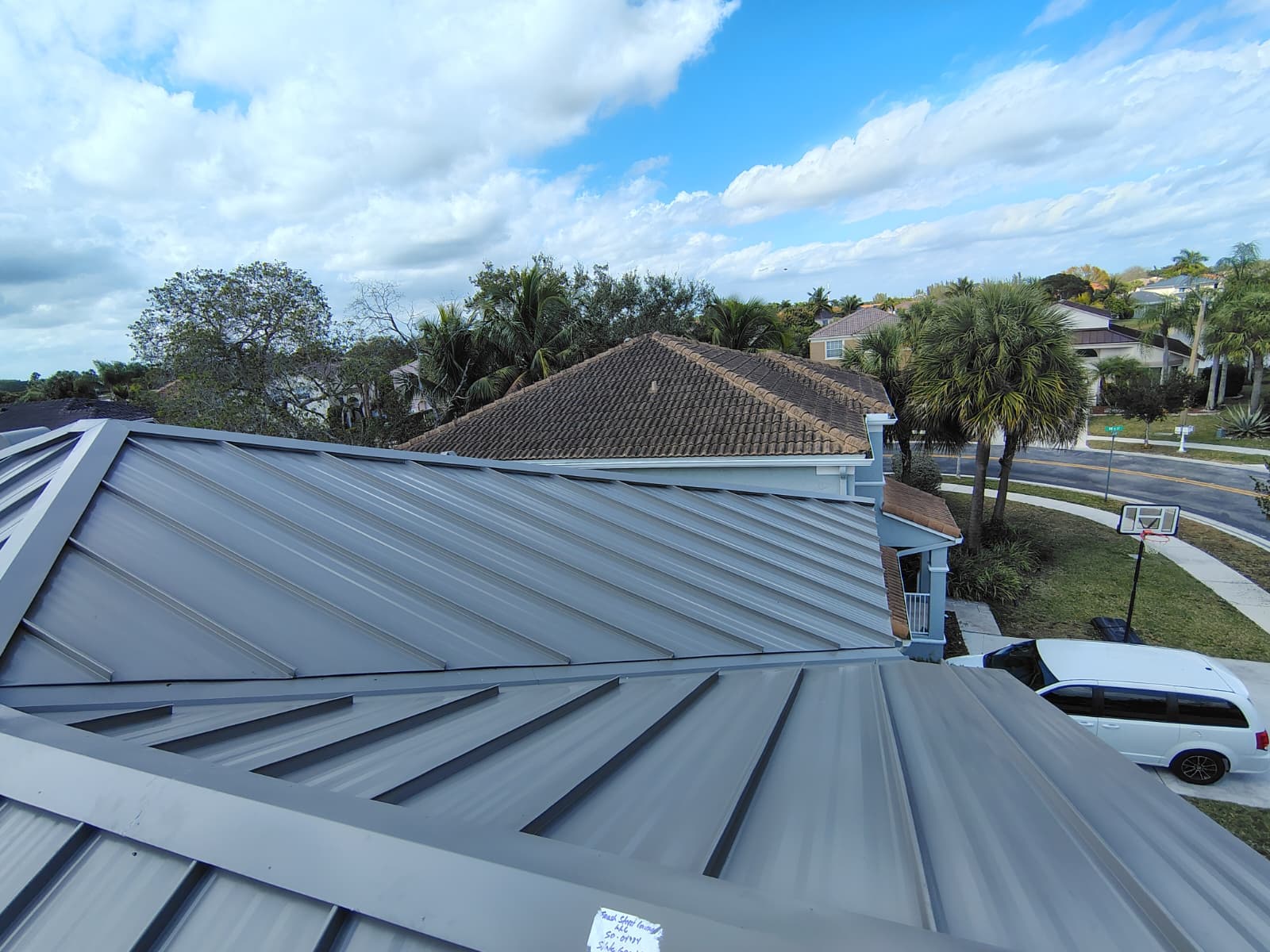
Metal is increasingly popular in the agricultural fringe near Krome and in the newer west-Homestead subdivisions. The wind performance is excellent, the reflectivity drops summer AC load, and the lifespan is 40-plus years. Worth the upfront cost if you are planning to stay.
Tile works for homes designed structurally to carry the weight. Most Homestead homes built post-Andrew use shingle on the lighter framing. Tile retrofits usually require structural work that is not worth it.
Decking and what we sometimes find
A lot of older Homestead homes hide decking damage from years of small leaks. We inspect every sheet of plywood once the old roof is off, and we replace soft or rotted decking. The unit price for decking replacement is written into the contract upfront, not surprise-billed.
Insurance pressure for Homestead homeowners
Homestead homes often see meaningful insurance premium pressure because of the geographic exposure. A fully wind-protected home (new roof with hurricane straps, peel-and-stick underlayment, code-compliant install) typically qualifies for the maximum wind-mitigation credit available. The annual premium drop after a wind-mitigation inspection is often substantial, sometimes thousands of dollars per year.
We hand you the inspection report the day we close the permit. You submit it to your carrier for the credit at the next renewal.
Timing during hurricane season
We avoid late-afternoon tear-offs during peak summer because thunderstorms in Homestead arrive without subtlety. The roof is never left open overnight. If a named storm is in the cone, we delay the start. The job will wait. Your roof is more important than our calendar.
A typical Homestead shingle replacement runs 2 to 4 days from tear-off to clean-up. Tile is 5 to 8 days. Permit processing through Miami-Dade County takes a few business days on the front.
The financing nod
We work with Service Finance, Renew Financial, GoodLeap, and Ygrene. Qualified Homestead homeowners can split the project across monthly payments. Some programs offer zero down with no payments for 12 to 18 months. We mention it because the question comes up.
Closing the job
At the end you get a closed Miami-Dade County permit, manufacturer warranty paperwork, a wind-mitigation inspection report for the insurance carrier, and a magnetic-swept yard with no nails. The roof goes back to being something you do not think about, which after Homestead's storm history is exactly the point.
If your Homestead roof is showing its age, or if you bought a home that needs the pre-Andrew framing assessed, we are happy to walk it. The honest answer is what we lead with.