Three Roofs in Three Eras: A West Palm Beach Walk-Through
El Cid bungalows, SoSo mid-centuries, and west-side 2000s subdivisions all need different roofs. Here is the West Palm Beach housing tour through a roofer's eyes.
West Palm Beach has more architectural variety per square mile than almost any city in the region. Drive ten minutes and you can pass a 1920s craftsman bungalow with original wood-frame windows, a 1960s CBS ranch with a low-slope add-on, and a 2002 subdivision house that looks like it could be in any Florida suburb. Each of those roofs needs a different conversation.
Here is what we mean.
Roof 1: the El Cid and Flamingo Park historic bungalow
The original 1920s and 1930s bungalow roofs in El Cid and Flamingo Park were usually cedar shake or early asphalt shingle. Most have been replaced once or twice since, but the structures underneath are still the originals. That means the framing was built for the lighter materials of the time, not for tile retrofit.
For these homes we install high-end architectural shingle or metal (for the look and the longevity). The historic district sometimes requires additional documentation when changing materials, which we handle as part of the project. Replacement-in-kind (asphalt to asphalt, or metal to metal) usually moves through historic review quickly.
The decking on these older homes sometimes needs partial replacement. We see board sheathing (the original plank decking from the era) and we replace soft sections with plywood that matches the structural intent. The end result is a roof that looks period-appropriate from the street and meets modern wind code underneath.
Roof 2: the SoSo or Northwood mid-century
The 1950s and 1960s CBS homes in SoSo and Northwood are a different conversation. The original install was usually asphalt shingle over plywood decking, with low-slope sections (often over an enclosed porch or carport conversion) that require modified bitumen or TPO rather than shingle.
The transition between the steep main roof and the low-slope section is where most of these homes leak first. The flashing detail at that transition needs to be done right or you end up with a wet ceiling in the section that used to be a Florida room. We pay extra attention to that detail during the install.
For most SoSo and Northwood reroofs we install architectural shingle on the sloped portions and modified bitumen or TPO on the low-slope sections, with stainless or hot-dip galvanized flashing at the transition. The result is a roof that handles the geometry that originally caused the trouble.
Roof 3: the western 2000s subdivision
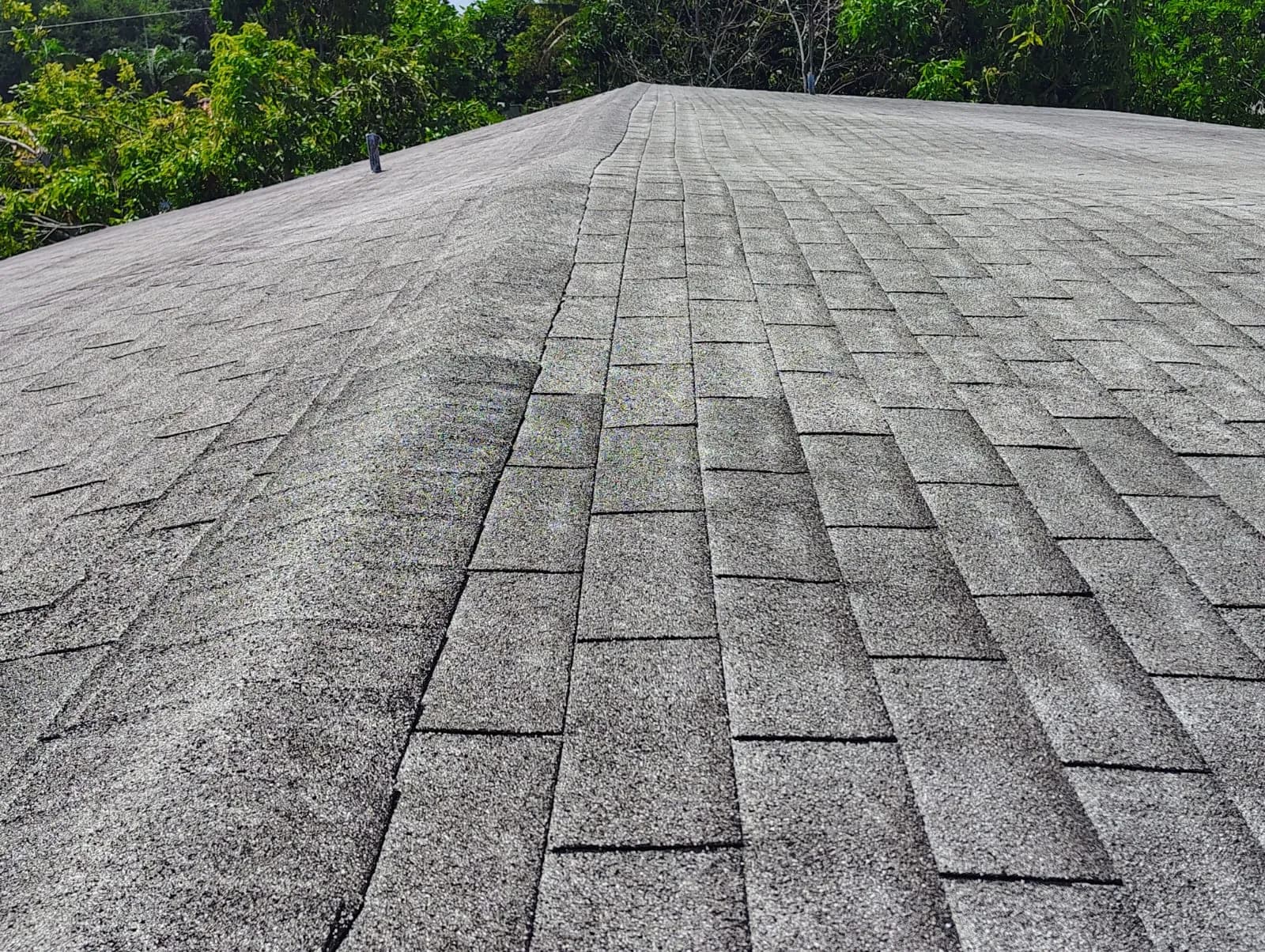
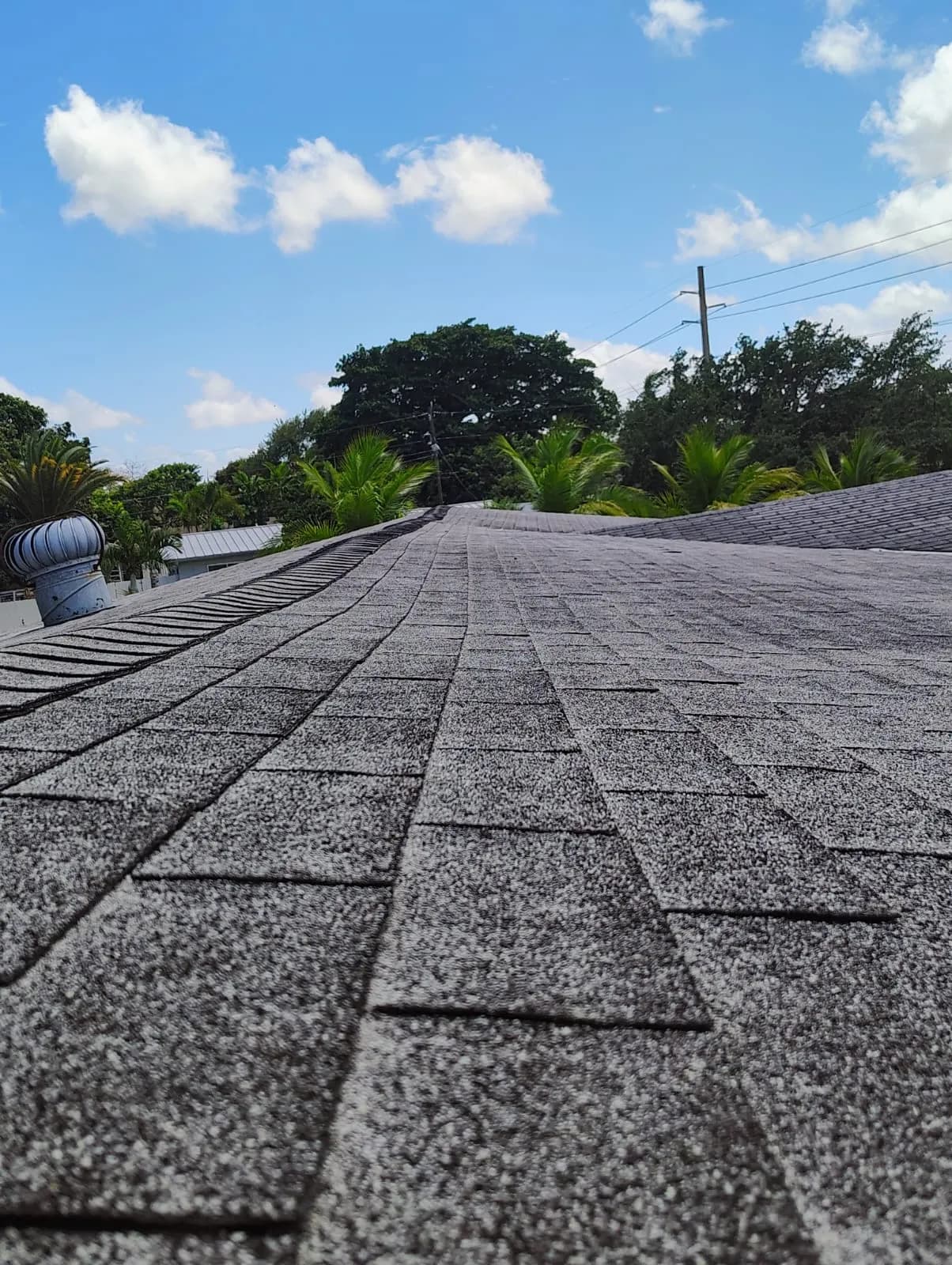
The 1990s and 2000s subdivisions west of I-95 (the Palm Beach Lakes corridor, the Bear Lakes area, the newer neighborhoods around Okeechobee Boulevard) are mostly architectural shingle on standard plywood decking, similar to suburban Broward construction. The original installs are now hitting the 20-year wall, and the second roof is the project for most of these homes.
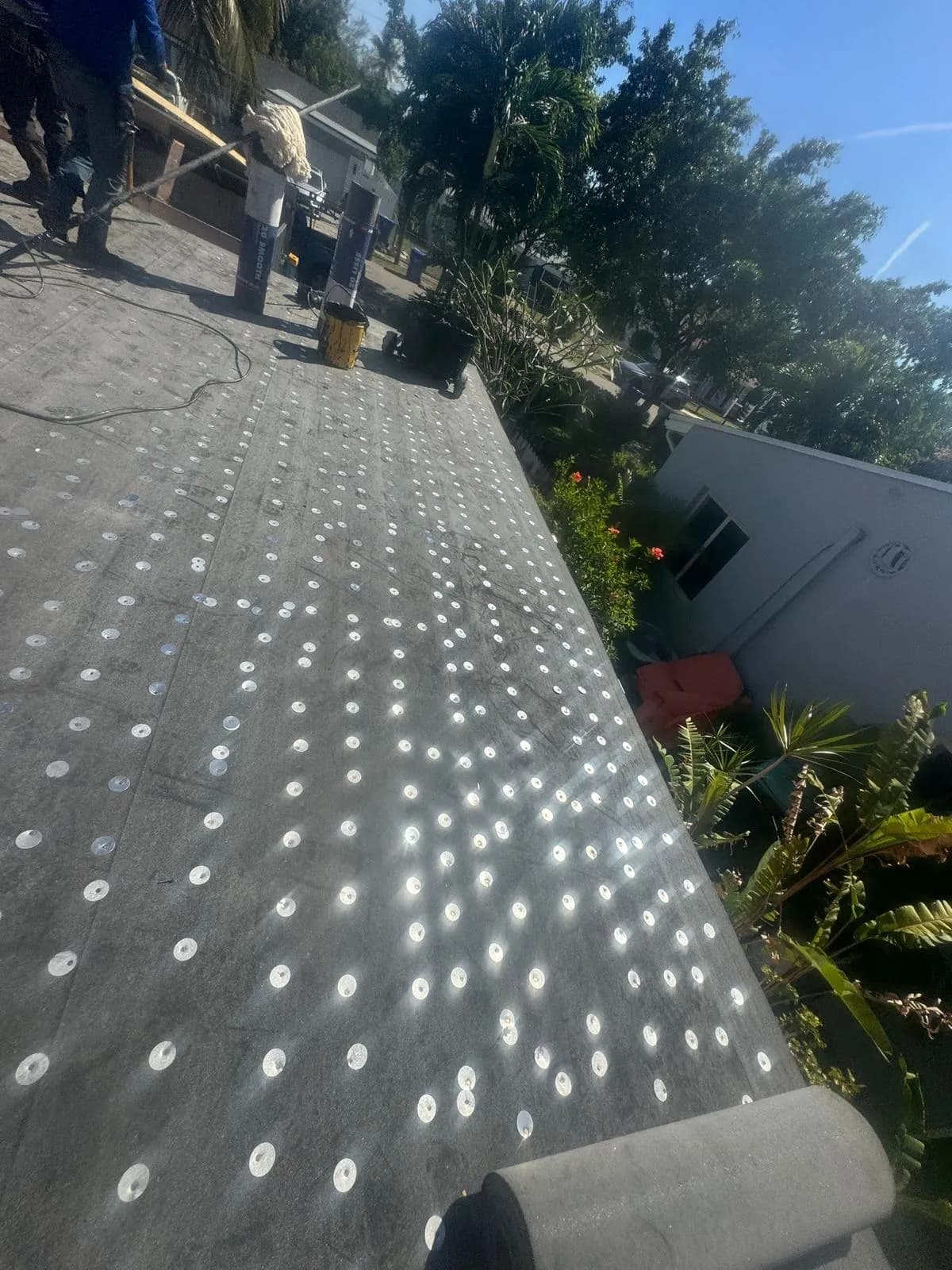
This is the most straightforward of the three. Architectural shingle in a 30-year warranty class, color-matched to the HOA spec if applicable, with the standard install detail (peel-and-stick perimeter, synthetic field, ring-shank fasteners, hurricane straps inspected). Most jobs run 2 to 4 days from tear-off to clean-up.
The salt-air thing for east-side homes
For homes east of Olive Avenue and within a mile of the Intracoastal, salt exposure is real. We spec stainless or hot-dip galvanized fasteners, marine-grade flashings where the budget allows, and copper accessories on the higher-end installs. Standard galvanized hardware corrodes faster on the east side, and the result shows up in 10 to 15 years as visible rust streaks on the fascia and gutters.
The marine-grade upgrade costs modestly more and extends practical service life by years. For east-side El Cid and SoSo homes, it is the right call.
The Palm Beach County permit
We pull every permit through Palm Beach County. Standard residential reroof processing takes a few business days. Dry-in inspection mid-job, final inspection at completion. Palm Beach County inspectors are generally pragmatic and on schedule.
For homes in designated historic districts (El Cid, Flamingo Park, parts of Northwood), additional historic review may be required for material changes. We handle the paperwork and timeline.
The insurance reality
Palm Beach County carriers writing in West Palm Beach are tightening up on roofs older than 15 years. A new roof with a wind-mitigation inspection report typically delivers a meaningful annual premium drop. For older east-side El Cid bungalows that were previously rated as higher risk, the annual savings can be substantial.
We hand you the wind-mitigation report at job close so you can submit it directly to your carrier.
The financing nod
We work with Service Finance, Renew Financial, GoodLeap, and Ygrene. Qualified West Palm Beach homeowners can split the project across monthly payments. Some programs offer zero down with no payments for 12 to 18 months. We mention it because the question comes up.
Cleanup that respects the neighborhood
West Palm Beach historic neighborhoods are not built for dump trucks parked across the swale for a week. We stage carefully, protect the bougainvillea and staghorn ferns that look perpetually one inch from death anyway, and magnetic-sweep at the end.
If your West Palm Beach roof is in any of the three eras and you want a quote that matches the home rather than treating it as a generic project, we are happy to walk it. Different eras, different conversations. We do them all.